Soft Washing vs Jet Washing: Which Is Safe for Render?
The short answer is straightforward: never put a high-pressure jet wash directly onto K-rend, monocouche, sand-and-cement render, soft brickwork, or roof tiles. Low-pressure biocide soft washing is the safe way to remove green algae, red staining, and black lichen without scarring the wall or forcing water behind the render coat.
Quick Trade Verdict
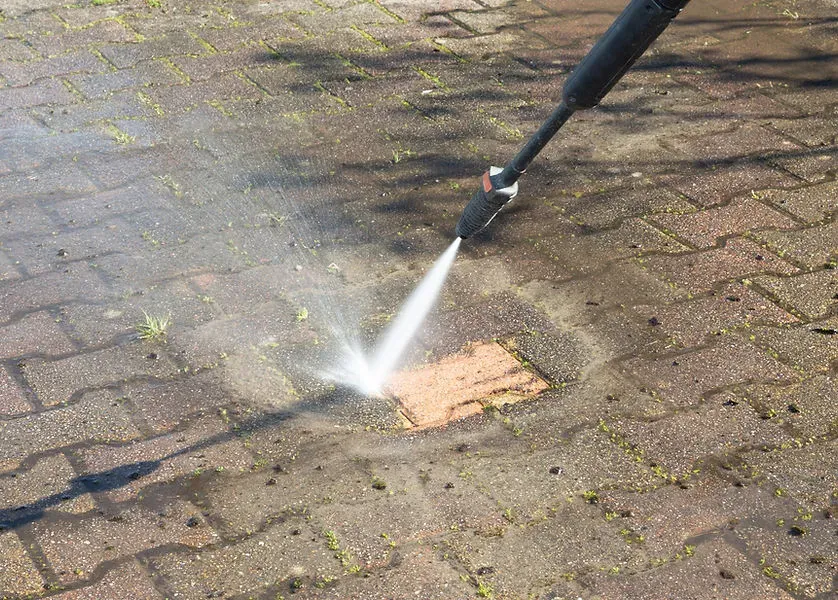
Save high-pressure rotary cleaners and jet lances for tough ground surfaces like block paving, concrete, and sturdy stone flags. For vertical walls, modern silicone renders, older lime mortar, and pitched roofs, a low-pressure chemical treatment kills the growth at the root and lets rain and a gentle rinse do the rest.
At a Glance: How the Two Methods Compare
Homeowners often assume all exterior cleaning uses the same machine turned up or down. On site, the two methods work in completely different ways and suit completely different materials.
High-Pressure Jet Washing
Unsafe for Render- How it works: Uses mechanical force (often 2,000 to 3,500+ PSI) to blast dirt and surface moss off hard stone or concrete.
- Where it belongs: Block paving driveways, concrete aprons, tarmac edges, and solid natural stone patios.
- The catch on walls: Slices into soft render, leaves permanent wand stripes, blows out weak mortar, and drives water behind window beads.
- How long it lasts: Only removes what you can see on the surface. Microscopic algae spores stay in the pores and grow back quickly.
Low-Pressure Soft Washing
Safe for Render & Roofs- How it works: Applies specialist biodegradable biocides at gentle garden-hose pressure (around 40 to 80 PSI) to sanitise the surface.
- Where it belongs: K-rend, Weber, monocouche and painted render, pebbledash, soft facing bricks, cladding, and concrete or clay roof tiles.
- The benefit: Zero abrasion to textured finishes and no water forced into cavities, soffits, or roof felt.
- How long it lasts: Neutralises spores deep in the grain, typically keeping walls clean for two to five years depending on shade and trees.
Why High-Pressure Lances Damage Render, Soft Brick, and Roof Tiles
We get called out every year to look at walls where a well-meaning homeowner—or a cheap contractor in a rush—has tried to clean a north-facing gable with a petrol pressure washer. Once the surface is damaged, no amount of cleaning fixes it; you are looking at patch repairs or a full re-render.
K-Rend, Monocouche, and Silicone Renders
Modern through-coloured renders have a scraped or textured finish designed to breathe. Hitting that grain at high pressure knocks the aggregate out and leaves visible zebra stripes or curved wand marks etched into the face. Worse still, concentrated water pressure forces moisture into hairline cracks, around bellcast beads, and around window reveals. When that trapped water freezes in winter, it expands and blows patches of render clean off the mesh or blockwork.
Older Soft Brickwork and Lime Mortar
Older handmade and soft red bricks rely on a harder fired outer skin to shed rain. A tight jet wash fan cuts straight through that outer crust, leaving the porous clay underneath exposed to frost spalling. It also washes out soft sand-and-lime pointing, opening gaps that let driving rain straight into the wall.
Concrete and Clay Roof Tiles
Jet washing a pitched roof is one of the fastest ways to cause an indoor leak. High pressure strips the protective sand-and-pigment coating off concrete tiles, making them rough and prone to growing moss twice as fast next time. It can also lift tiles, crack brittle clay nibs, and blast gallons of water upwards over the tile headlap straight onto rotten felt or into the loft insulation.
How Soft Washing Cleans Render Safely (and Why It Lasts Longer)
Most discoloration on Leicestershire houses isn't actually dirt—it is living organic growth. Damp, shaded elevations pick up green algae, stubborn black lichen spots, and rusty-red streaking (Trentepohlia algae), which loves modern breathable renders.
When our exterior cleaning team carries out soft washing, we treat the wall chemically rather than mechanically. We apply a measured, HSE-approved biocide blend through low-pressure nozzles or telescopic water-fed poles. The solution dwells on the surface, breaking down the biofilm and killing the spores embedded inside the pores of the render.
1. Green Algae
Usually clears on the day or within a few days as the treatment breaks down the cell walls and a gentle low-pressure rinse washes the dead residue away.
2. Red Staining
Common under eaves and around overflows. Needs targeted dwell time and occasionally a second coat on heavy patches to lift the orange tint fully.
3. Black Lichen & Roof Moss
On roofs, we scrape thick moss off by hand using shaped profile blades first, then apply biocide so remaining roots die off and weather away naturally over several weeks.
Honest Trade Judgment: When a Clean Is Enough vs When Render Needs Repair
A decent tradesperson should always inspect the wall before quoting a clean. Soft washing will bring sound, stained render back to its original colour, but it cannot glue failing render back onto a wall.
- Clean is enough when: The render sounds solid when tapped, there are no wide structural cracks, window perimeter seals are intact, and the marks are purely algae, traffic film, or weathering.
- Repair first when: Sections sound hollow when tapped, flakes are dropping off above the damp-proof course, or coping stones and lead flashing above the render are leaking. Water ingress from a failed gutter or cracked sill will only stain the wall again within months if the underlying defect isn't fixed first.
If we spot slipped tiles, split gutter joints, or perished window mastic while assessing the exterior, we will tell you straight so you can put the fault right before paying for cosmetic cleaning.
What Happens on the Day & What Drives the Cost
Soft washing a typical three-bedroom semi-detached house usually takes half a day to a full day depending on how heavy the staining is and how awkward the access is. A reputable contractor will never just turn up and start spraying chemicals near your flowerbeds.
What Should Happen on Site
- Plant and pond protection: Pre-wetting lawns and shrubs with clean water, covering sensitive bedding plants with breathable tarps, and protecting garden ponds.
- Downpipe diversion: Disconnecting or capping rainwater downpipes that feed water butts so runoff doesn't contaminate stored garden water.
- Masking sensitive points: Checking trickle vents, external electrical sockets, and doorbell cameras before applying liquid.
- Post-clean neutralising rinse: Flushing patios, sills, and surrounding greenery thoroughly with fresh water before packing up.
What Affects the Price
- Height and access: Ground-level walls and two-storey elevations reachable with telescopic carbon poles cost far less than three-storey gables or conservatory roofs that need a scaffold tower or MEWP.
- Render texture and severity: Deeply pitted pebbledash or heavy black lichen requires more chemical, longer dwell time, and sometimes a follow-up pass.
- Total surface area: One shaded gable end is obviously a fraction of the cost of a full four-sided detached house.
- Bundled exterior jobs: Clearing gutters, washing fascias and soffits, or cleaning the patio at the same visit saves setup time and reduces the overall bill.
Quick Checklist Before You Book Anyone
Always ask for a written quote confirming the cleaning method—specifically stating low-pressure soft washing rather than jet washing for render or roofs—and check that they hold valid Public Liability Insurance. If high-level access equipment or scaffolding needs to stand on a public pavement, confirm who arranges any highway permits, and run through the Citizens Advice home improvement checklist before agreeing to payment terms.
Need Safe Render or Roof Cleaning in Leicestershire?
We inspect your walls, gutters, and roof tiles first and give you a straight, written quote—no high-pressure shortcuts and no guesswork.
Related Services & Guides
Explore matching exterior work and practical property care advice.
Jet Washing, Soft Washing & Exterior Cleaning in Syston
Professional jet washing and soft washing in Syston. Revive your driveway, patio, and render with THC Home and Garden Solutions. Call 0116 464 8075.
View details →Soakaway vs French Drain: Which Fixes a Boggy Garden?
See when clay soil needs a soakaway or French drain, how percolation tests and falls affect quotes, and when Building Control or Party Wall rules apply.
View details →How to Vet a Builder or Landscaper Before Paying
Learn how to check public liability insurance, waste licences, and itemised quotes before hiring a builder or landscaper, plus key UK consumer checks.
View details →Roof Repair vs Replacement: When Is Patching Enough?
Learn when slipped tiles or flashing leaks are worth patching, when rotten battens make re-roofing better value, and what drives repair quotes.
View details →Do You Need Building Regs for a New Roof?
Find out when re-covering a roof triggers Building Regulations for insulation and structure, plus Leicester Building Control and permit rules.
View details →Sandstone vs Porcelain Patios: Which Should You Choose?
Compare Indian sandstone and porcelain patios in UK weather, including slip resistance, algae upkeep, slurry priming, sub-base depth, and jointing.
View details →How High Can a Garden Fence Be Without Planning?
Check UK garden fence and gate height limits for front and back boundaries, conservation area rules, and when to notify neighbours before building.
View details →An Annual Exterior Checklist to Prevent Costly Repairs
Use this seasonal routine to check gutters, soffits, chimney pointing, render, and boundary walls so you catch frost or storm wear before damp sets in.
View details →Best Time of Year to Lay New Turf in the UK
Learn when to lay new turf in the UK, with practical advice on Leicestershire clay soil prep, watering routines, and avoiding frost or drought.
View details →End-of-Lease Exterior Clean-Up: What Landlords Check
Prepare commercial sites for handover and avoid dilapidation disputes. Learn what landlords check, from gutter clearance and cladding to waste removal.
View details →How Long Does It Take to Install a New Driveway?
Learn how long block paving, gravel, and concrete driveways take, from excavation and curing times to Leicestershire skip and dropped kerb permits.
View details →What Happens During a Full Garden Clearance?
Learn what to expect during a full garden clearance, from bramble cutbacks and nesting bird checks to shed demolition, waste sorting, and legal disposal.
View details →