How High Can a Garden Fence Be Without Planning?
Most homeowners in England do not need planning permission for a standard garden fence or gate, provided you stay within set height limits. Getting the measurements wrong—especially at the front of the house or on a sloped plot—can lead to enforcement notices or rows with neighbours, so it pays to check before a single post hole is dug.
Back & Side Boundaries
Up to 2 metres
Around 6ft 6in—enough for a standard 6ft fence panel sitting on a 6-inch concrete gravel board.
Next to a Road or Footpath
Up to 1 metre
Around 3ft 3in anywhere your fence or gate borders a highway, pavement, or public footpath.
Special Restrictions
Check First
Listed buildings, conservation areas, Article 4 directions, and newer estate deeds can lower or remove these limits.
Back, Side, and Front Boundary Height Limits
Under permitted development rules in England, you can put up a fence, gate, or garden wall up to 2 metres (6ft 6in) high along rear and side boundaries without applying for planning permission. Once a boundary runs next to a highway used by vehicles—or the footpath alongside that road—the permitted limit drops straight to 1 metre (3ft 3in).
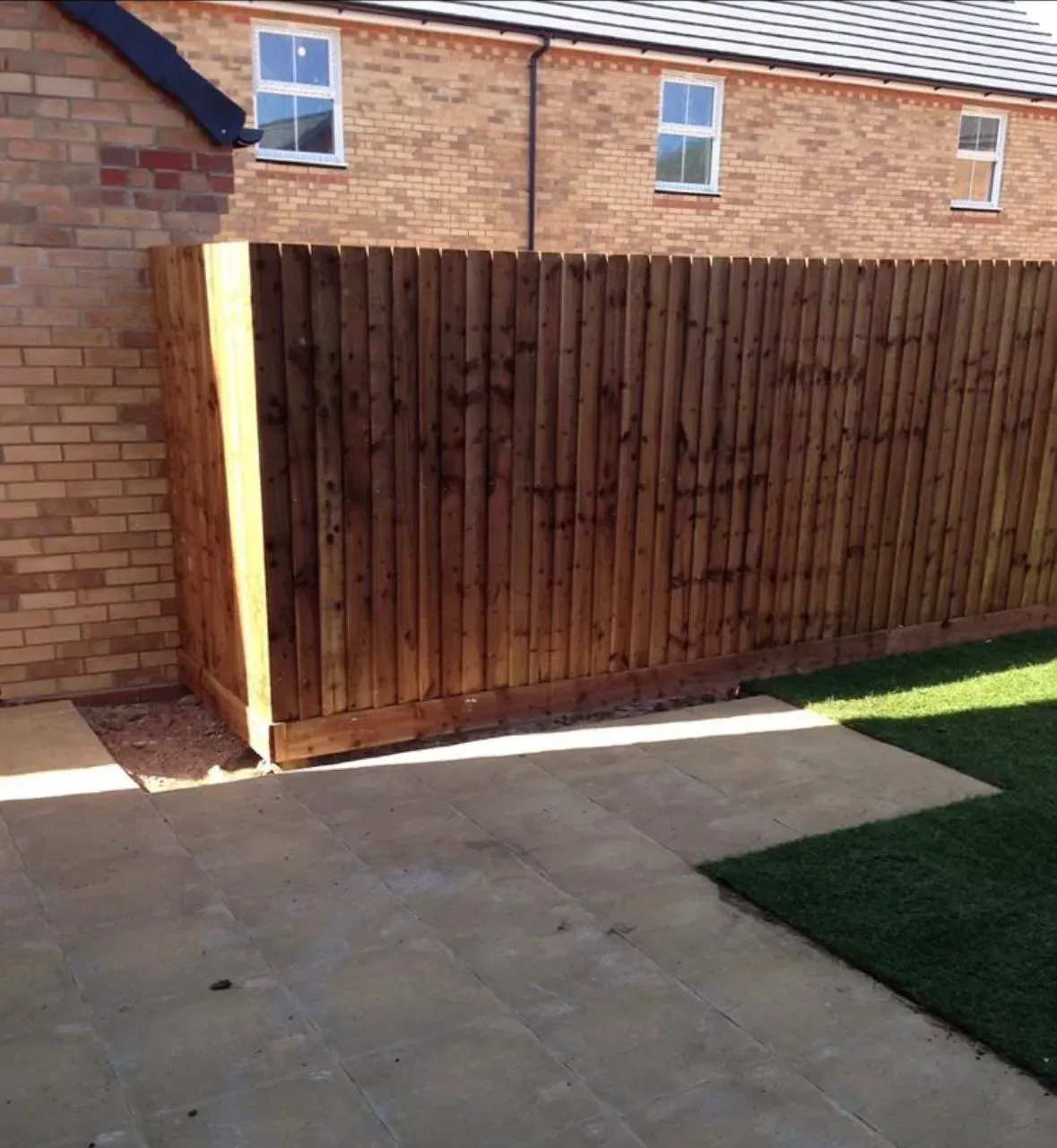
A detail that catches plenty of people out is how a standard fence stacks up once it is built. A 6ft timber panel (1.83m) on its own leaves plenty of headroom, and fitting a 150mm (6-inch) concrete gravel board underneath brings you to 1.98m—comfortably inside the 2-metre cap. However, if you add a 1ft or 2ft trellis topper on top of a 6ft panel, the total height hits 2.13m to 2.44m. Trellis counts as part of the fence height, so anything over 2 metres needs planning permission.
You can check the national height rules in full on the Planning Portal fence and wall limits page before ordering materials.
How Fence Height Is Measured on Sloped Gardens & Raised Patios
Height is always measured from the natural ground level immediately next to the fence. If your garden sits higher than your neighbour's—or you have built up a patio, sleeper bed, or timber deck—the measurement is taken from the highest natural ground level on either side, not from the top of your new patio.
On sloping plots across Leicestershire, we usually step each 1.83m bay down the gradient rather than raking panels at odd angles. Stepping keeps every post plumb and ensures no single section creeps above 2 metres at the low end of a bay.
Garden Gates, Front Boundaries, and Like-for-Like Repairs
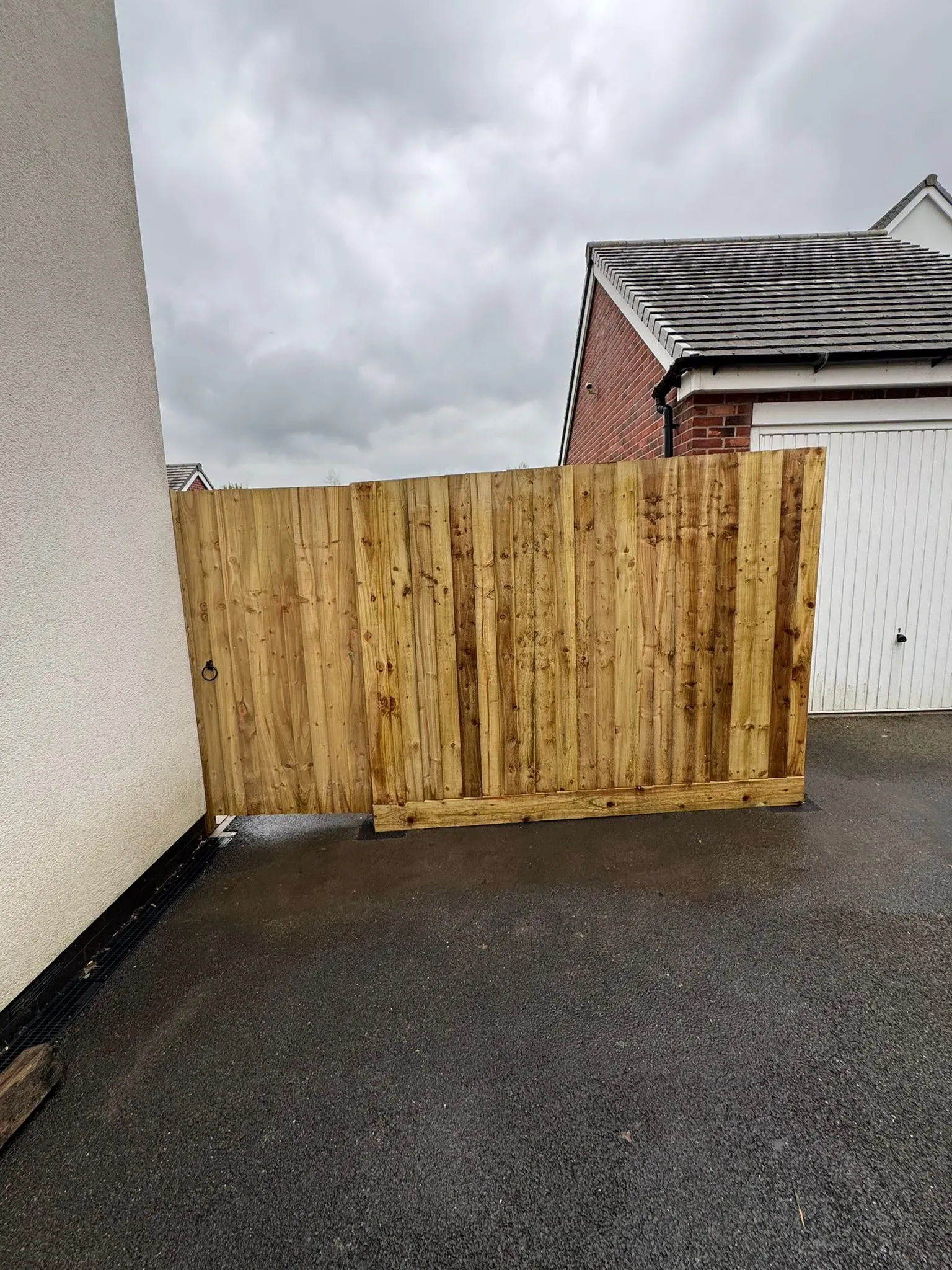
The same 1-metre and 2-metre limits apply to gates just as much as fence panels. A tall side gate tucked between your house wall and the boundary fence can be up to 2 metres high for privacy and security. Put a gate across a front driveway right next to the pavement, though, and it needs to stay at 1 metre or under unless you get planning permission—mainly so drivers and pedestrians have clear sightlines when pulling out.
Replacing an old fence like-for-like up to the same permitted height does not need an application. On site, we always tell customers honestly when a simple repair will do: if winter wind has snapped one or two timber posts while the panels are still sound, fitting concrete repair spurs or swapping the odd post saves replacing the whole run. Once gravel boards are crumbling, multiple posts are loose in the ground, or the timber has rotted through at the base, stripping the line out and fitting fresh posts in concrete is the sensible long-term fix.
Conservation Areas, Listed Buildings, and Estate Covenants
Even a standard 1.8m back fence or a 900mm picket fence at the front can require permission in certain spots:
- Listed buildings: If your property is listed (or sits within the curtilage of a listed building), you cannot put up any new fence, gate, or boundary wall without planning permission—and often listed building consent too.
- Conservation areas & Article 4 directions: Many Leicestershire villages have conservation areas. While back fences up to 2m are often still permitted, councils sometimes issue an Article 4 direction removing permitted development rights for front boundary walls, gates, and fences facing the street.
- New-build restrictive covenants: Plenty of modern estates have covenants in the title deeds forbidding any fence or hedge forward of the front building line, regardless of height. Planning rules and title covenants are separate—meeting one does not override the other.
Neighbour Notices, Boundary Lines, and the Party Wall Act
Standard timber or concrete fence posts set into post holes on your own land do not trigger the Party Wall etc. Act 1996. You do not have to serve a statutory Party Wall notice just to swap out timber panels and posts.
The rules change if you are building a masonry garden wall (a "party fence wall") directly astride the boundary line, or digging deeper foundations within 3 metres of a neighbour's house, extension, or garage. In those cases, you must serve written notice in advance—the GOV.UK Party Wall Act booklet sets out the exact notice periods and templates.
Even for a straightforward timber run, we always advise checking the T-marks on your deeds and having a quick chat with next door before work starts. Knowing which side owns the boundary, agreeing who gets the clean face of the boards, and checking if our lads need to step onto their patio to clear an old concrete footing avoids arguments on the morning of the job. When we carry out professional fence and gate fitting, we string a tight line strictly along the agreed boundary before breaking ground.
What Drives the Cost and Timescale on Site
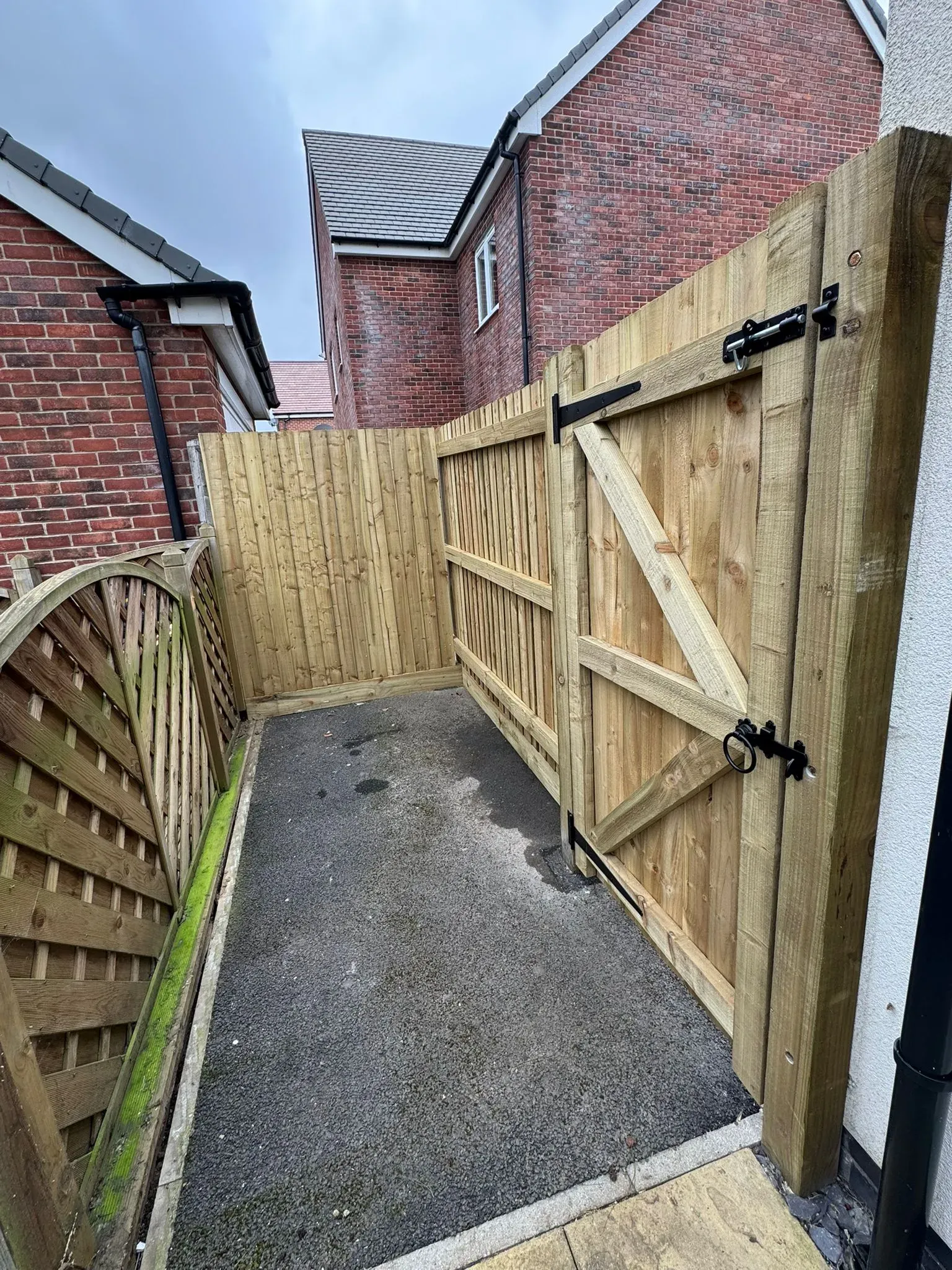
An average 10- to 15-bay garden fence usually takes one to two days from stripping out the old panels to sweeping up. Three practical things change the price and time more than anything else:
- Old footings and roots: Breaking out old 600mm lumps of concrete or working around mature hedge roots takes far longer than digging fresh holes in clear soil.
- Ground and access: Heavy clay, steep slopes that need stepped gravel boards, or narrow side alleys where materials have to be carried through by hand add labour time.
- Post and board spec: Concrete slotted posts with concrete gravel boards cost a little more upfront than treated timber posts, but they do not rot at ground level and make swapping a damaged panel years later a ten-minute job.
Need Advice or a Quote for a New Fence or Gate?
If you are unsure about boundary heights, sloping ground, or whether your old fence can be repaired rather than replaced, give us a ring. We will come out, measure up properly, and give you a clear written quote with no pressure.
Related Services & Guides
← Back to all guidesFencing And Gates in Syston
Expert fencing and gate installations in Syston and Leicestershire. Quality timber panels, security gates, and repairs. Call 0116 464 8075 for a quote.
Soakaway vs French Drain: Which Fixes a Boggy Garden?
See when clay soil needs a soakaway or French drain, how percolation tests and falls affect quotes, and when Building Control or Party Wall rules apply.
How to Vet a Builder or Landscaper Before Paying
Learn how to check public liability insurance, waste licences, and itemised quotes before hiring a builder or landscaper, plus key UK consumer checks.
Roof Repair vs Replacement: When Is Patching Enough?
Learn when slipped tiles or flashing leaks are worth patching, when rotten battens make re-roofing better value, and what drives repair quotes.
Do You Need Building Regs for a New Roof?
Find out when re-covering a roof triggers Building Regulations for insulation and structure, plus Leicester Building Control and permit rules.
Sandstone vs Porcelain Patios: Which Should You Choose?
Compare Indian sandstone and porcelain patios in UK weather, including slip resistance, algae upkeep, slurry priming, sub-base depth, and jointing.
An Annual Exterior Checklist to Prevent Costly Repairs
Use this seasonal routine to check gutters, soffits, chimney pointing, render, and boundary walls so you catch frost or storm wear before damp sets in.
Soft Washing vs Jet Washing: Which Is Safe for Render?
Learn why jet washing can damage K-rend, soft brickwork, and roof tiles, and when low-pressure biocide soft washing safely removes moss and algae.
Best Time of Year to Lay New Turf in the UK
Learn when to lay new turf in the UK, with practical advice on Leicestershire clay soil prep, watering routines, and avoiding frost or drought.
End-of-Lease Exterior Clean-Up: What Landlords Check
Prepare commercial sites for handover and avoid dilapidation disputes. Learn what landlords check, from gutter clearance and cladding to waste removal.
How Long Does It Take to Install a New Driveway?
Learn how long block paving, gravel, and concrete driveways take, from excavation and curing times to Leicestershire skip and dropped kerb permits.
What Happens During a Full Garden Clearance?
Learn what to expect during a full garden clearance, from bramble cutbacks and nesting bird checks to shed demolition, waste sorting, and legal disposal.