Sandstone vs Porcelain Patios: Which Should You Choose?
If you are weighing up natural Indian sandstone against 20mm outdoor porcelain, the honest answer comes down to how much shade your garden gets, how clean you want the slabs to stay over winter, and your budget for proper installation. Porcelain stays cleaner and resists frost better, while sandstone gives you natural warmth and costs less to cut and lay.
Choose Indian Sandstone If
You want natural colour variation, softer traditional character to suit brick or older cottages, and a slightly lower supply-and-fit price. Best in open, sunny gardens where slabs dry out after rain.
Choose 20mm Porcelain If
You want crisp straight lines, minimal maintenance in damp or shaded areas, and high stain resistance around BBQs and garden furniture—provided you budget for slurry priming and diamond cutting.
How Natural Sandstone and Outdoor Porcelain Compare on Site
Brochures make every patio look spotless on day one. Out on the tools in Leicestershire, here is how calibrated 22mm Indian sandstone and 20mm vitrified outdoor porcelain actually behave once they are down.
| Factor | Natural Indian Sandstone (22mm Calibrated) | Outdoor Porcelain (20mm Vitrified) |
|---|---|---|
| Water Absorption | Porous natural stone. Absorbs rainwater, leaf tannin, and mud unless sealed. | Less than 0.5% porosity. Moisture sits on top rather than soaking into the slab. |
| Slip Resistance When Wet | Good natural riven grip when clean, though slippery if algae builds up in shade. | Rated R11 anti-slip texture for outdoor slabs; reliable grip in heavy rain. |
| Algae & Lichen Upkeep | Prone to green algae and black spot lichen under trees; needs annual wash or treatment. | Algae cannot root into the tile body; usually brushes or washes off with soapy water. |
| Bedding & Priming | Full wet mortar bed. Slurry priming recommended to prevent moisture staining. | Full wet mortar bed plus mandatory SBR/cement priming slurry on every slab back. |
| Cutting & Waste | Cuts cleanly and quickly with a standard stone diamond blade; occasional natural veining faults. | Very dense and brittle if rushed; requires specialist porcelain blades and careful handling. |
| Installed Cost Level | Moderate. Lower labour and consumable costs for cutting and pointing. | Higher. Extra cost for priming slurry, specialist grout, blades, and slower cutting. |
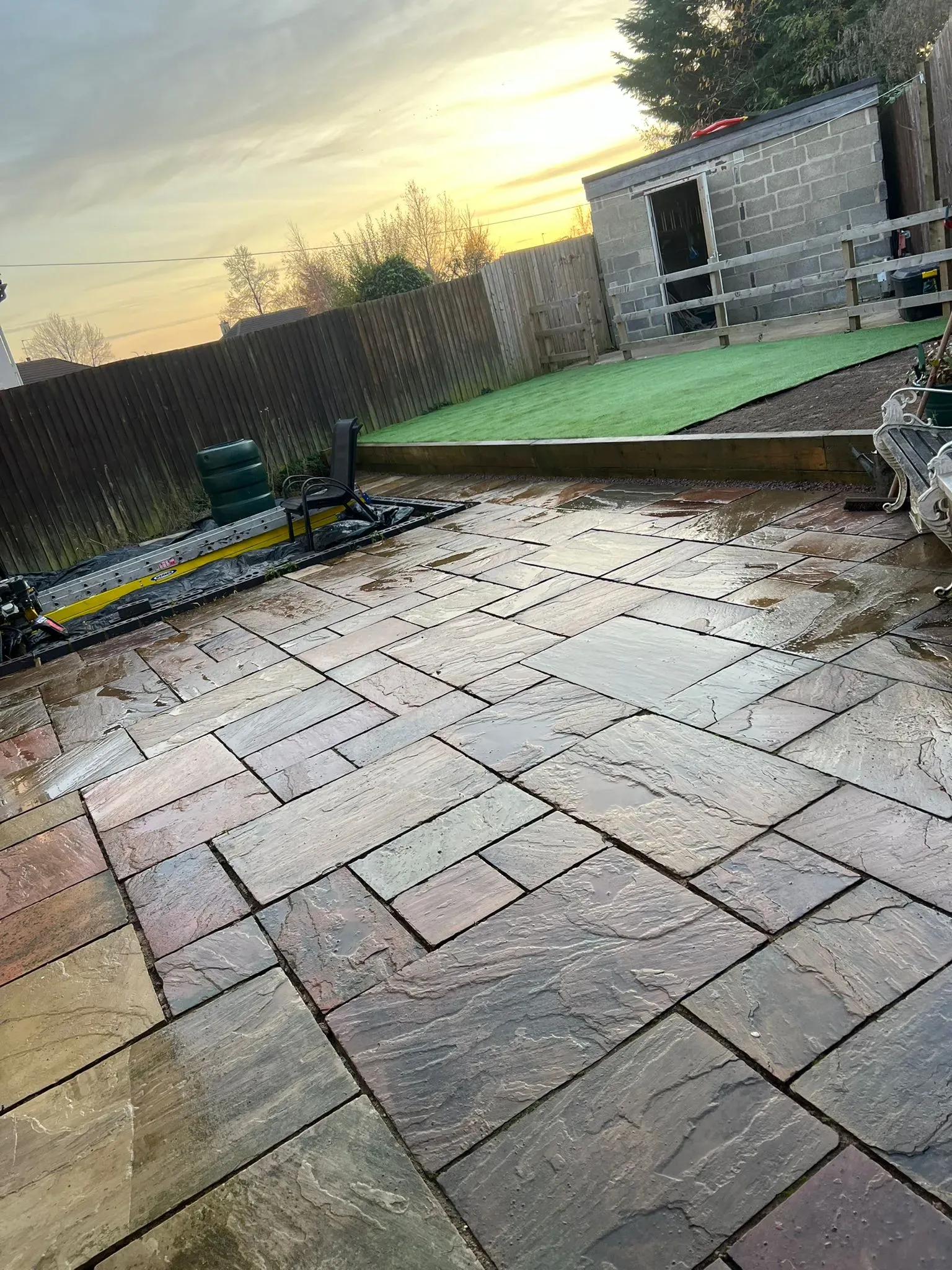
Indian Sandstone in Wet Conditions
Wet weather brings out the rich natural tones in riven sandstone—buff, brown, and grey flecks come alive after a shower. Because each stone is split by hand at the quarry, no two slabs are identical, and sizes vary by a few millimetres, which suits traditional 10mm mortar joints.
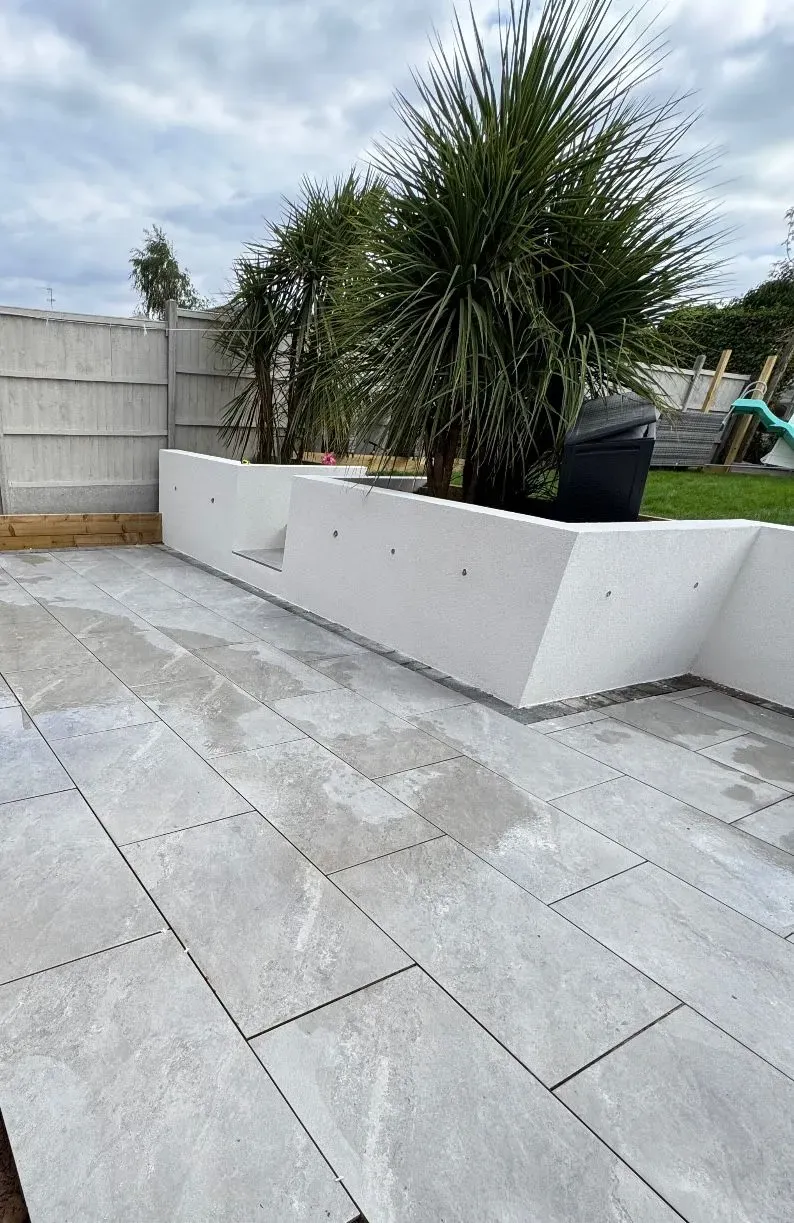
20mm Outdoor Porcelain
Rectified porcelain tiles are machine-cut to exact dimensions, letting us lay tight, uniform 3mm to 5mm joints. Colour stays completely consistent from batch to batch, and it will not fade in summer sun or absorb grease from a barbecue.
How They Handle UK Rain, Shade, and Winter Frost
Slip Resistance: Riven Grip vs R11 Rating
Homeowners often worry porcelain will feel like an indoor bathroom tile when it rains. Genuine 20mm exterior porcelain is manufactured with a micro-textured surface—usually rated R11—which gives solid underfoot grip even in soaking trainers. Make sure you never buy 10mm indoor tiles for an outside terrace; they crack in frost and turn into a skating rink when wet.
Natural sandstone relies on its split, undulating riven face for grip. When freshly washed it is very safe, though smoother sawn-and-honed sandstone finishes can become slick in freezing drizzle if moss has started to take hold.
Algae, Black Spot, and Sealing Upkeep
In a shaded north-facing garden or beneath overhanging trees, sandstone holds dampness for days after autumn rain. That damp feeds green algae and stubborn black lichen spots that root right into the pores of the stone. Jet washing blasts the top off, yet if you hit sandstone too hard with a rotary nozzle, you can flake the surface layer. A gentle biocide wash and a breathable sealer every two to three years keeps sandstone looking sharp.
Porcelain does not need sealing at all. Dirt and autumn leaves can still leave surface slime if left untouched all winter, but because nothing penetrates the clay body, a stiff brush and warm soapy water—or a low-pressure rinse—brings it straight back to new.
Why Sub-Base Depth, Slurry Priming, and Jointing Matter More Than the Slab
Nine out of ten failed patios we get called out to replace were not ruined by bad stone—they failed underneath. Whether you choose sandstone or porcelain, shortcuts on groundwork always show up within two winters.
1. Proper Excavation and Sub-Base Depth
A pedestrian patio needs solid ground underneath it, not turf or loose topsoil. On typical heavy clay across Leicestershire, we dig down far enough to install at least 100mm of compacted MOT Type 1 hardcore (whacked down in layers), plus a 35mm to 50mm mortar bed and the slab itself. That keeps frost heave and sinking corners at bay.
Finished levels must sit at least 150mm below your house damp-proof course with a steady fall (around 1:60 to 1:80) directing water away from walls into lawn edges or linear drainage. Note that if you are paving a front garden over 5 square metres with non-permeable slabs or mortar joints, check the Planning Portal front garden paving rules—water must drain into a border or soakaway rather than running onto the pavement.
2. Full Mortar Bed and Slurry Priming (Never Spot-Dab)
Never let anyone lay slabs on five blobs ("dot and dab") of mortar. Hollow voids under the corners trap rainwater, freeze in January, and rock or crack slabs when you step on them. Both sandstone and porcelain must sit on a full, even bed of 4:1 sharp sand and cement mortar.
For porcelain, slurry priming is non-negotiable. Because porcelain absorbs almost zero water, ordinary mortar cannot key into the underside on its own. We coat the back of every tile with a polymer-modified priming slurry just before tapping it into the wet bed. Without slurry, porcelain tiles frequently pop completely clean off the mortar after their first cold snap. We also slurry-prime smooth or pale sandstone to stop cement salts bleeding through as brown patches.
3. Choosing the Right Jointing Method
Riven sandstone looks best with 8mm to 12mm joints pointed either with a damp sand-cement mortar or a quality two-part resin compound (avoid cheap single-part brush-in mixes on shaded clay sites, as they crumble under pressure washing). Porcelain needs a narrower 3mm to 5mm joint filled with a dedicated exterior porcelain grout—such as a flowable cementitious or epoxy grout—that locks tightly to the sharp edges and resists weeds. You can see how our team handles sub-bases, levels, and finishing details on our Syston and Leicestershire patio paving page.
What Drives the Cost — and Repair vs Full Replacement
Slab price per square metre is only part of the bill. On site, the biggest cost drivers are excavation depth, how far barrows have to run from a skip, extra drainage channels, steps, and cutting time. Porcelain usually adds 15% to 25% to labour and materials compared with sandstone because of priming slurry, specialist exterior grout, heavier diamond blade wear, and slower wet-saw cutting around drainage pipes and curved walls.
Can an Old Patio Be Repaired Instead?
If your existing sandstone has solid ground underneath and only two or three slabs have rocked loose or mortar joints have washed out, lifting those slabs, grinding out crumbling pointing, and re-bedding with slurry and fresh mortar is a sensible repair. However, if half the patio has sunk towards the house, weeds are pushing through sand beds, or water pools against the brickwork, patching the surface wastes money—it needs a full dig-out and compacted Type 1 sub-base.
Realistic Timescales & Checking Quotes
A straightforward 25 to 35 square metre patio typically takes 4 to 6 working days from dig-out to grouting, plus a couple of days curing before heavy garden furniture goes back on. Before booking anyone, make sure your written quote specifies dig depth, MOT Type 1 thickness, full mortar bedding, slurry priming, and waste removal—the Citizens Advice home improvement checklist is a handy reference for what should be written down before work starts.
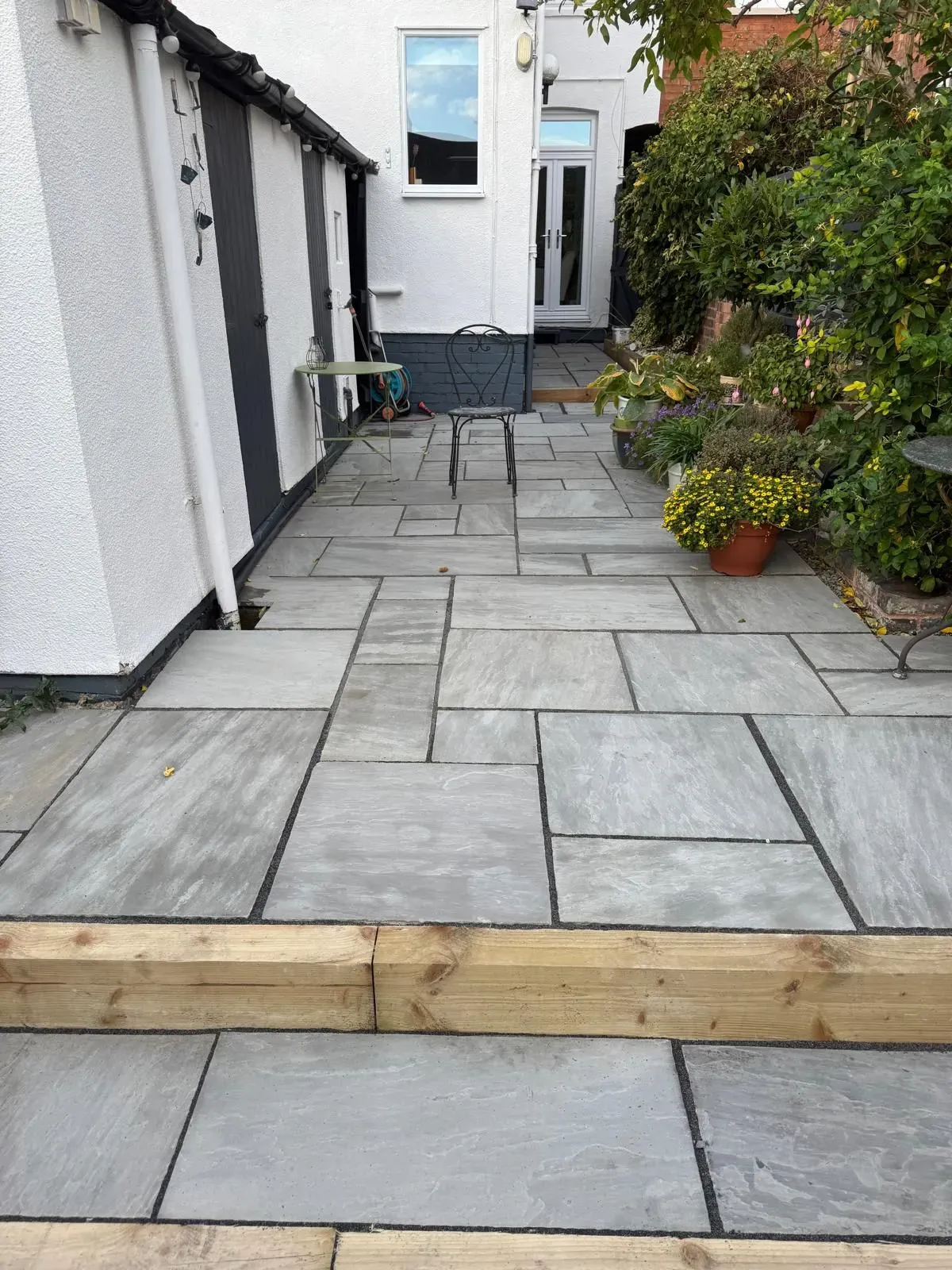
Steps, Edging & Drainage
Sleeper steps, recessed manhole covers, and ACO drainage channels add time on site but keep levels practical and compliant around back doors.
What a Good Patio Quote Should List
- Excavation depth and licensed skip/muck-away disposal
- Compacted MOT Type 1 sub-base (minimum 100mm)
- Full wet mortar bed plus SBR priming slurry
- Drainage falls away from walls and exact jointing product
Final Checklist: Which Patio Fits Your Garden?
Go with Indian Sandstone when:
- • Your patio gets plenty of sun and airflow to dry quickly after rain.
- • You like mixed natural tones (Raj Green, Kandla Grey, Fossil Mint) and varied slab sizes.
- • You do not mind giving it a gentle wash each spring and sealing every few years.
- • You want a tough, classic garden terrace without paying porcelain cutting premiums.
Go with 20mm Porcelain when:
- • Trees, fences, or north-facing walls keep the patio damp for much of the year.
- • You cook outside often and want wine, grease, and ash to wipe off cleanly.
- • You prefer crisp, uniform grid lines and consistent colour across a modern extension.
- • You want the lowest possible day-to-day maintenance with zero sealing.
Want Honest Advice on Your Own Garden?
We can bring sandstone and porcelain samples round, check your ground levels and drainage, and give you a clear, itemised written quote with no obligation.
Related Services & Guides
Explore matching services and practical homeowner guides from THC Home and Garden Solutions.
Patios And Paving in Syston
Expert patio and paving installation in Syston and Leicestershire. From Indian sandstone to porcelain, get a free quote from THC Home and Garden Solutions.
Soakaway vs French Drain: Which Fixes a Boggy Garden?
See when clay soil needs a soakaway or French drain, how percolation tests and falls affect quotes, and when Building Control or Party Wall rules apply.
How to Vet a Builder or Landscaper Before Paying
Learn how to check public liability insurance, waste licences, and itemised quotes before hiring a builder or landscaper, plus key UK consumer checks.
Roof Repair vs Replacement: When Is Patching Enough?
Learn when slipped tiles or flashing leaks are worth patching, when rotten battens make re-roofing better value, and what drives repair quotes.
Do You Need Building Regs for a New Roof?
Find out when re-covering a roof triggers Building Regulations for insulation and structure, plus Leicester Building Control and permit rules.
How High Can a Garden Fence Be Without Planning?
Check UK garden fence and gate height limits for front and back boundaries, conservation area rules, and when to notify neighbours before building.
An Annual Exterior Checklist to Prevent Costly Repairs
Use this seasonal routine to check gutters, soffits, chimney pointing, render, and boundary walls so you catch frost or storm wear before damp sets in.
Soft Washing vs Jet Washing: Which Is Safe for Render?
Learn why jet washing can damage K-rend, soft brickwork, and roof tiles, and when low-pressure biocide soft washing safely removes moss and algae.
Best Time of Year to Lay New Turf in the UK
Learn when to lay new turf in the UK, with practical advice on Leicestershire clay soil prep, watering routines, and avoiding frost or drought.
End-of-Lease Exterior Clean-Up: What Landlords Check
Prepare commercial sites for handover and avoid dilapidation disputes. Learn what landlords check, from gutter clearance and cladding to waste removal.
How Long Does It Take to Install a New Driveway?
Learn how long block paving, gravel, and concrete driveways take, from excavation and curing times to Leicestershire skip and dropped kerb permits.
What Happens During a Full Garden Clearance?
Learn what to expect during a full garden clearance, from bramble cutbacks and nesting bird checks to shed demolition, waste sorting, and legal disposal.