End-of-Lease Exterior Clean-Up: What Landlords Check
When a commercial lease ends, most tenants spend all their time painting the office walls and sweeping the warehouse floor, only to get hit with a hefty dilapidation bill for what is outside. Building surveyors inspect from the ridge line down to the boundary fence, and if gutters are overflowing, cladding is green with algae, or the yard is full of pallets and potholes, they will price the rectification work at full contractor rates.
We carry out pre-handover exterior clear-ups for units, retail premises, and yards across Leicestershire, giving you photographic proof and Waste Transfer Notes for your landlord.
Most full repairing and insuring (FRI) leases require you to hand the property back in good repair and clean order—not brand new, unless the schedule of condition specifically says otherwise. Where tenants lose money is leaving obvious maintenance jobs undone. A blocked valley gutter or a small patch of broken tarmac might cost a few hundred pounds to sort out before you hand the keys back, whereas a landlord's surveyor will often schedule full scaffolding, skip hire, and contractor management fees on top.
1. High-Level Gutter Clearance & Cladding Washing
After five or ten years of business, warehouse box gutters and downpipes collect a thick layer of windblown dust, moss, sycamore seedlings, and bird droppings. Surveyors always check the gutter line—especially if there are damp stains running down the internal blockwork or rust marks below the eaves.
On site, we clear gutters properly rather than just pushing debris down the outlets. Depending on building height and access, we either use a high-reach industrial gutter vacuum from ground level with a camera head, or bring in a scissor lift or cherry picker so we can inspect joints, clear hopper heads, and flush downpipes to make sure water runs freely into the yard gullies.
When Washing Is Enough
Green algae, traffic film, and diesel soot near loading bays usually clean off well with low-pressure soft washing and a biodegradable detergent, followed by a controlled rinse. It brings steel plastisol cladding and brick piers back up without stripping old paint.
When Repairs Are Needed
If forklift masts have dented bottom cladding sheets, flashings have come loose, or cut-edge corrosion has started blistering the steel around gutter laps, washing alone will not pass inspection. Those sheets or seals need patching, treating, or swapping out before handover.
If your unit opens directly onto a public street or tight retail frontage and any cherry picker, scaffold tower, or waste skip has to sit on the pavement or road, check the Leicester skip and scaffolding permits rules early so highway licences do not delay your handover date.
2. Car Parks, Loading Bays, Potholes & Drainage
Yard surfaces take a hammering from delivery lorries, pallet trucks, and winter frost. When a landlord walks the car park and service yard, they look closely at trip hazards, standing water, oil spills, and weeds forcing their way up through kerb joints and expansion gaps.
You do not always need to resurface an entire yard to settle a dilapidation point. Honest trade judgment comes down to what is happening underneath the surface:
Isolated potholes and fretted tarmac: Where the sub-base is still firm, we saw-cut clean square edges around the hole, sweep out loose grit, paint the edges with tack coat, and compact hot or heavy-duty cold-lay asphalt flush with the surrounding level.
Sunken bays and failed sub-bases: If HGV turning circles have rutted deeply or cracked concrete aprons are rocking when a vehicle drives over them, surface patching will break up within weeks. Those sections need excavating, re-compacting with Type 1 MOT stone, and reinstating in concrete or heavy-duty tarmac.
Blocked yard gullies and ACO channels: Silt-choked slot drains cause puddles right outside roller shutters. Clearing the silt traps, pressure-washing oil staining off block paving or concrete, and killing off kerbside weeds makes a huge visual difference at inspection.
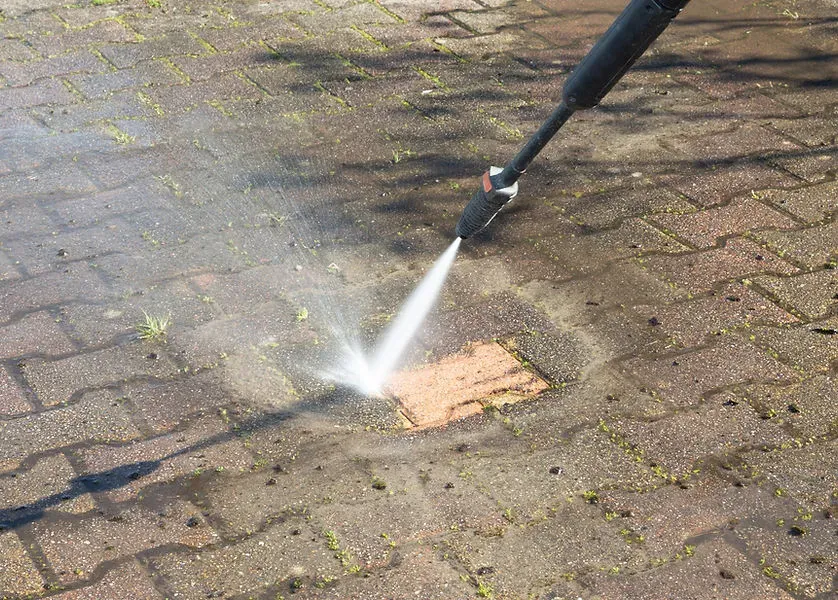
High-pressure rotary and lance washing lifts compacted dirt, moss, and weed growth out of paved customer walkways and parking bays.
3. Boundary Fencing, Gates & Overgrown Vegetation
Boundary lines are often neglected because nobody notices the back corner behind the skip until move-out week. Landlords inspect perimeter steel palisade fencing, timber closeboard runs, concrete posts, bollards, and double-leaf yard gates for security and safety.
Common problems we put right before handover include clipped fence pales from reversing vans, snapped drop-bolts on security gates, leaning timber posts, and brambles or ivy growing up boundary walls. In many cases, straightening a bent palisade pale, swapping two rotted timber panels, and re-hanging a dropped gate hinge saves replacing an entire boundary run. Where self-seeded buddleia or saplings have taken hold along brick walls or drainage runs, cutting them back to ground level and treating the stumps prevents future structural claims.
Whether you need a one-off handover tidy or ongoing scheduled upkeep across multiple units, our commercial exterior facilities management team handles everything from gate repairs and bollard installation to routine grounds maintenance.
4. Compliant Site Waste Removal & Handover Proof
"Leave the site clear and free of tenant fixtures and rubbish" is standard wording in nearly every commercial lease. That covers broken pallets stacked by the fence, old signage boards, rubble, spare racking, tyres, and overgrown green waste cut down during the tidy-up.
Under UK Duty of Care waste laws, businesses cannot simply pay a random man-with-a-van cash to take commercial rubbish away. If it gets fly-tipped down a country lane, the Environment Agency and the landlord can trace it back to your company. Always ask to see a contractor's licence on the Environment Agency waste carrier register and make sure you receive properly completed Waste Transfer Notes (WTNs) showing where the waste went.
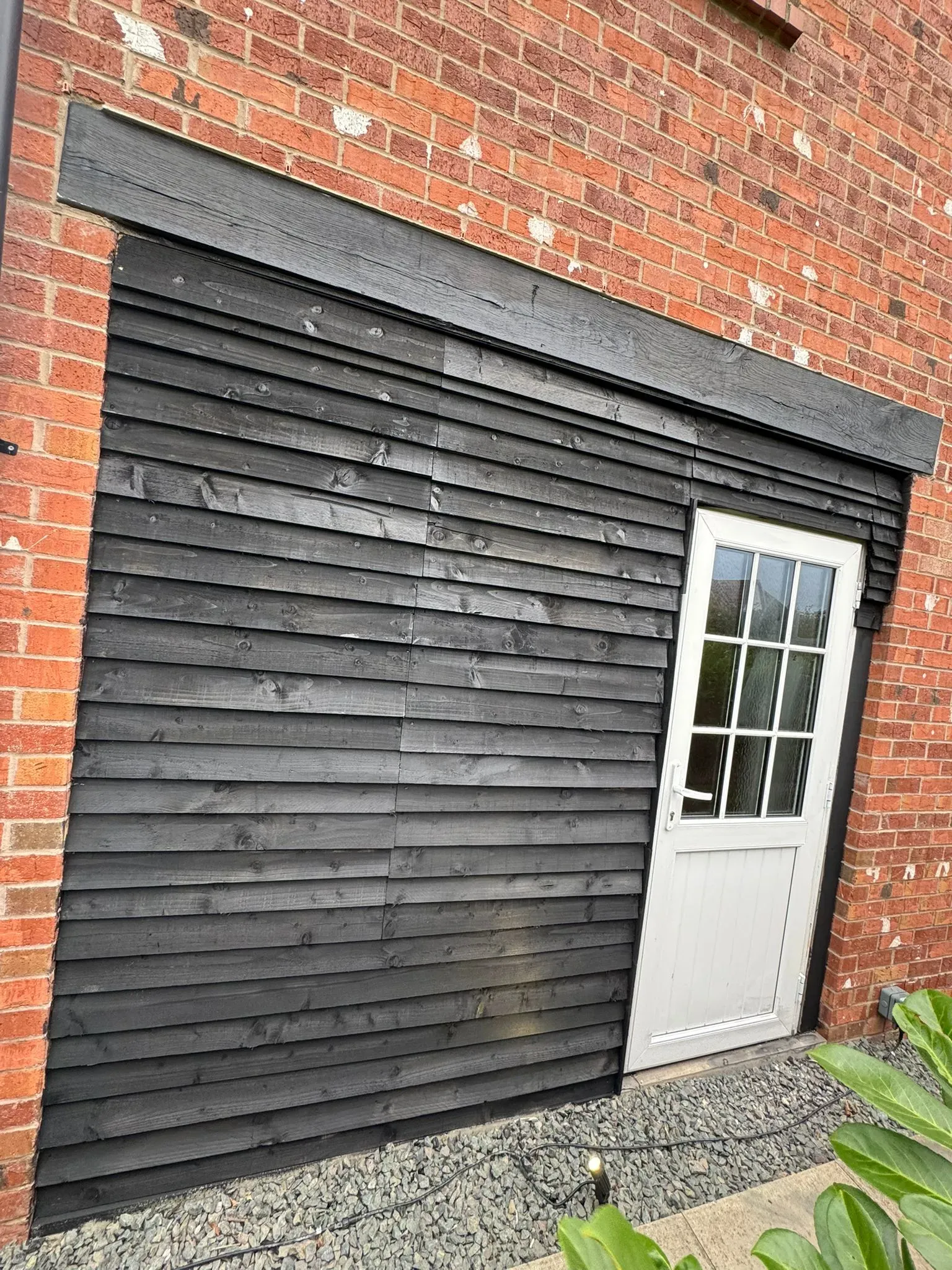
Freshly treated exterior cladding, brickwork, and clean gravel margins ready for inspection.
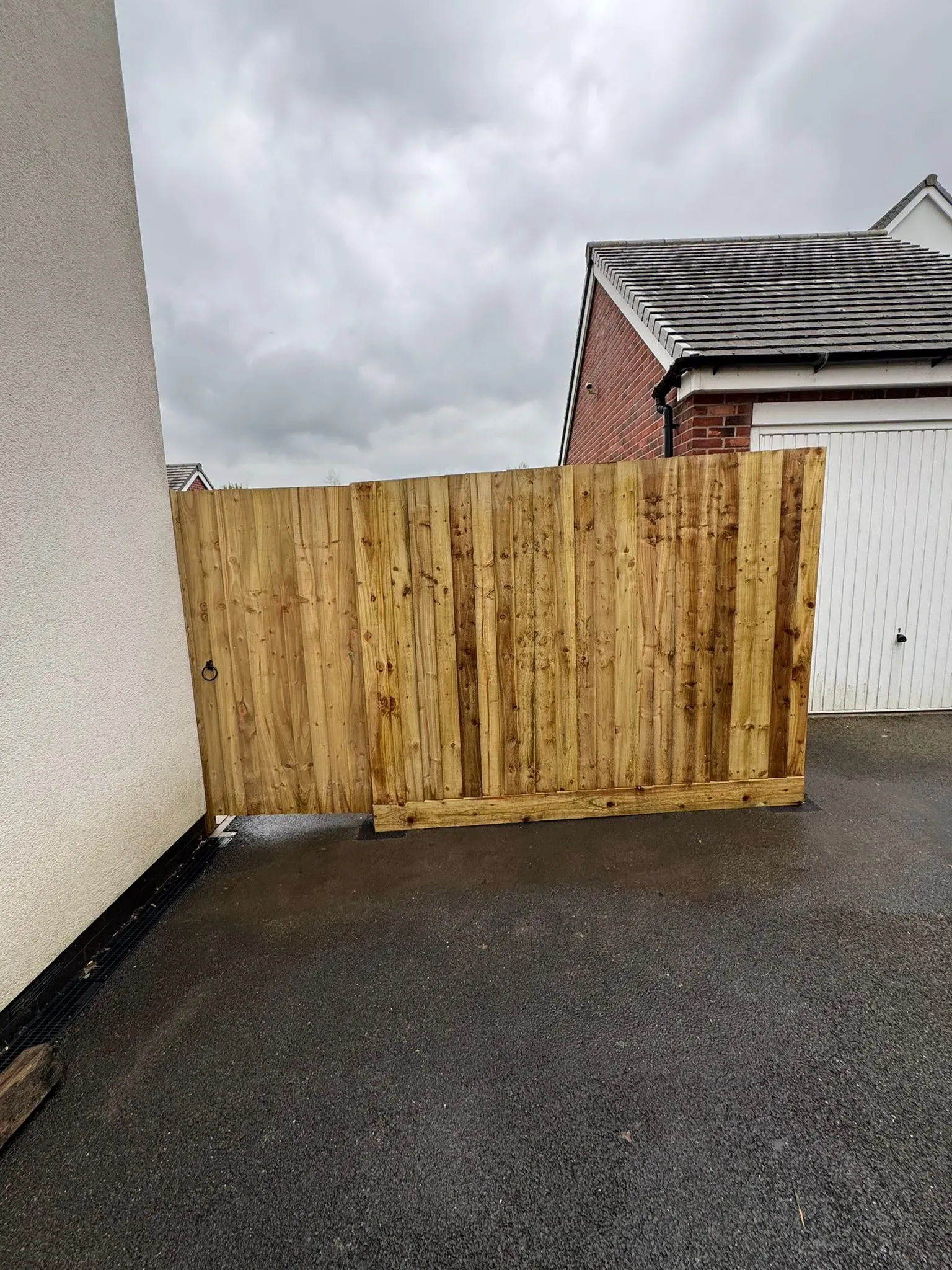
Sound perimeter fencing, working gate latches, and swept tarmac accessways help avoid boundary deductions.
5. What Drives Cost, Timescales & What Happens on the Day
No two units are identical, so sensible pricing starts with a proper walk-round rather than guesswork over the phone. The main things that shift the price up or down are:
Access equipment: Clearing single-storey eaves from the ground is far quicker and cheaper than hiring an articulated boom lift to reach around parked vehicles or high warehouse canopies.
Waste volume and type: Clean green waste and timber cost less per tonne to tip than mixed builder's rubble, treated sleepers, or old tyres.
Surface condition: Tight saw-cut tarmac patches take a morning; digging out sunken concrete pads or jetting collapsed drains takes longer and requires heavier plant.
Realistic timescales: A standard 2,000–5,000 sq ft industrial unit with gutter clearance, cladding wash, yard sweep, weed kill, and a few small repairs is usually a 1 to 2 day job for a two-person crew. Larger logistics yards with fencing replacements, multiple pothole repairs, and heavy waste clearance normally take 3 to 5 days.
On the day: We cone off work zones, sheet over roller shutter motors and external electrical boxes before washing, protect neighbouring vehicles from overspray, and wash down all walkways once waste is loaded. At the end, we take dated before-and-after photos of gutters, repaired tarmac, boundaries, and the cleared yard so you have a clear record for your managing agent.
Ready to Get Your Unit Handover-Ready?
Talk to THC Home and Garden Solutions about high-level gutter clearance, cladding washing, yard repairs, and licensed waste removal across Leicester & Leicestershire.