How Long Does It Take to Install a New Driveway?
For a standard two-car front drive (roughly 35 to 50 square metres), expect 2 to 3 days for gravel, 4 to 6 working days for block paving, and 3 to 5 days on site for concrete—plus curing time before you can park a car on concrete.
Gravel Driveway
2 – 3 Days
Drive on it as soon as the final layer is rolled and edged.
Block Paving
4 – 6 Days
Walk straight away; wait 24–48 hours if kerb haunching is fresh.
Concrete Driveway
3 – 5 Days + Cure
Walk after 48 hours; wait 7–14 days before parking cars.
Why Groundwork Takes Up Most of the Week
Most homeowners look at a driveway job and picture the surface going down—the blocks being clicked into place or the gravel being raked out. On site, laying the visible finish is usually the quickest part. What actually takes the time is digging out the old surface, getting down to solid ground, and building a compacted sub-base that will not sink the first winter a delivery van turns around on it.
If someone quotes you two days for a full block-paved drive including excavation, ask how deep they are digging. A proper domestic driveway needs 200mm to 250mm excavated below finished level to fit a geotextile membrane, at least 150mm of compacted MOT Type 1 stone, a bedding layer, and the surface itself. Rushing that stage is the number one reason drives rut and hold puddles within twelve months.
If you are still weighing up materials or need heavy-duty surfacing for a larger frontage, you can see how we approach driveway installation across Syston and Leicestershire before booking a measure.
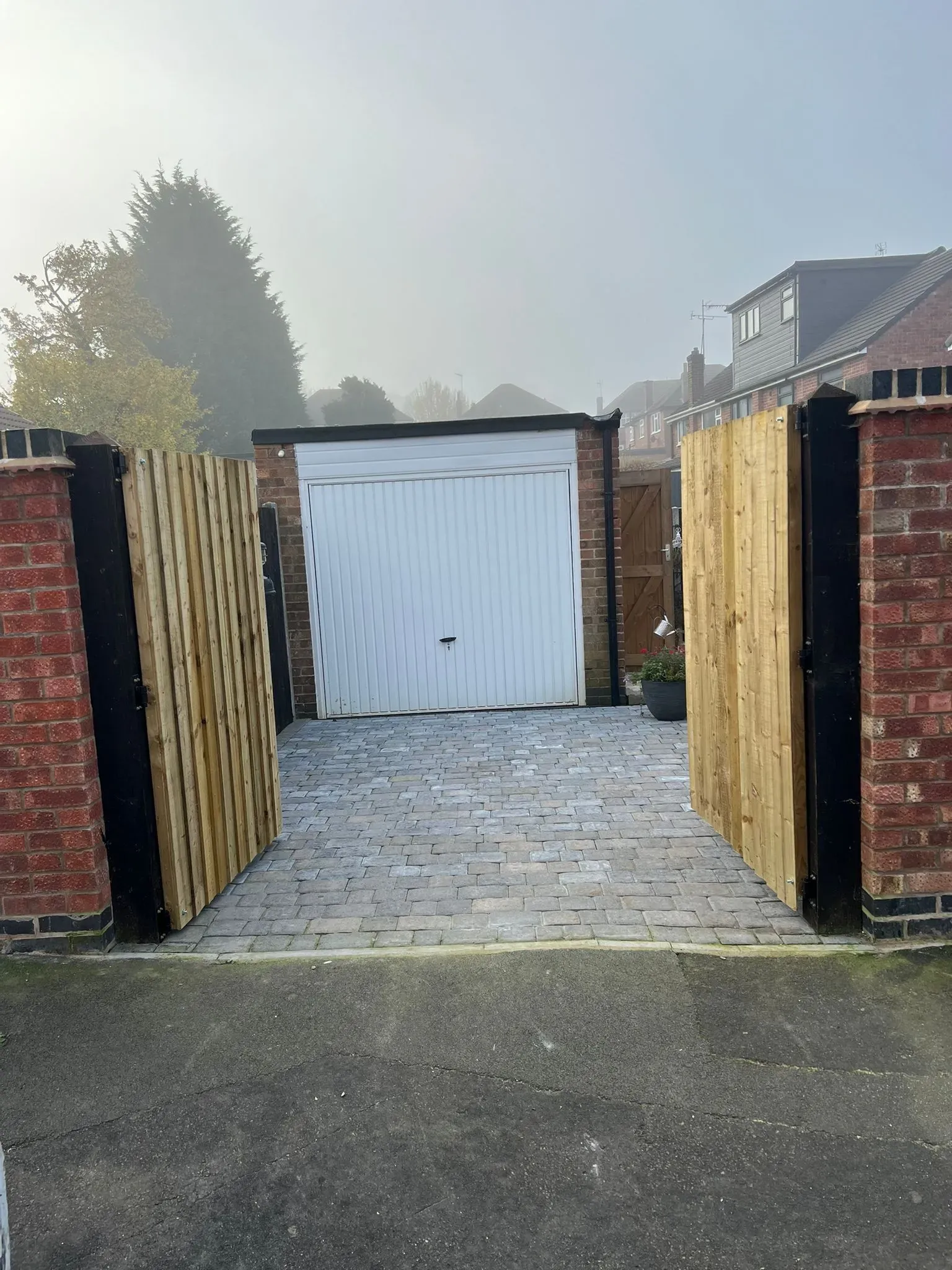
A finished block-paved entrance with brick pillars and timber gates—the kerb edging and sub-base sit beneath the surface to keep the blocks locked tight.
At-a-Glance Driveway Timelines (35–50m² Two-Car Drive)
The table below assumes reasonable access for a mini-digger and grab lorry or skip, straightforward drainage, and dry enough weather to compact the stone and screed the sand properly.
| Surface Type | Excavation & Sub-Base | Laying & Finishing | Walk On It | Park On It |
|---|---|---|---|---|
| Gravel / Shingle | 1 – 2 days | 0.5 – 1 day | Immediately | Immediately once rolled |
| Block Paving | 1.5 – 2.5 days | 2.5 – 3.5 days | Immediately | 24 – 48 hrs (for edge mortar) |
| Poured Concrete | 1.5 – 2.5 days | 1 – 2 days (formwork & pour) | 24 – 48 hours | 7 days (cars) / 14+ days (vans) |
Day-by-Day: What Actually Happens on Site
Whether you choose gravel, block paving, or concrete, the first couple of days look very similar. Here is how a typical 5-day block paving job runs from first bucket in the ground to hosing down the pavement.
Strip-Out, Excavation & Services Check
First job is marking out the levels against your damp-proof course (always keeping finished paving at least 150mm below the DPC) and checking manhole covers, gas lines, water stopcocks, and BT ducts. We strip off old turf, crazy paving, or broken tarmac and dig down to firm subsoil. Spoil goes straight into a grab wagon or a skip. If the skip has to sit on the road rather than your own garden, you will need a permit in place—in the city, check Leicester skip and scaffolding permits before delivery day.
Membrane, Drainage & Sub-Base Compaction
Once the dig-out is trimmed and rolled, we lay a non-woven geotextile membrane so clay soil cannot work its way up into the stone over time. Next come any linear ACO channel drains along the garage threshold or pavement edge, plus soakaway runs if the surface is non-permeable. MOT Type 1 crushed limestone (or Type 3 for permeable drives) goes in in 75mm layers, each pass compacted thoroughly with a heavy vibrating plate or ride-on roller. Perimeter edging kerbs are bedded and haunched in semi-dry concrete so nothing spreads sideways.
Screeding & Laying the Surface
For gravel: We lay the final edging restraints or gravel grids if specified, spread 40mm–50mm of angular aggregate (usually 14mm or 20mm shingle, which locks together better than round pea gravel), and rake it level. Job done.
For block paving: We screed a 30mm–40mm layer of washed sharp sand over the compacted Type 1 using screed rails, then lay the main field of blocks working off the finished surface so nobody walks on the prepared sand.
For concrete: Timber shuttering is fixed to exact falls, steel mesh reinforcement is raised on chairs where required, and ready-mix concrete is poured, tamped, and floated.
Precision Cuts, Jointing & Tidy-Up
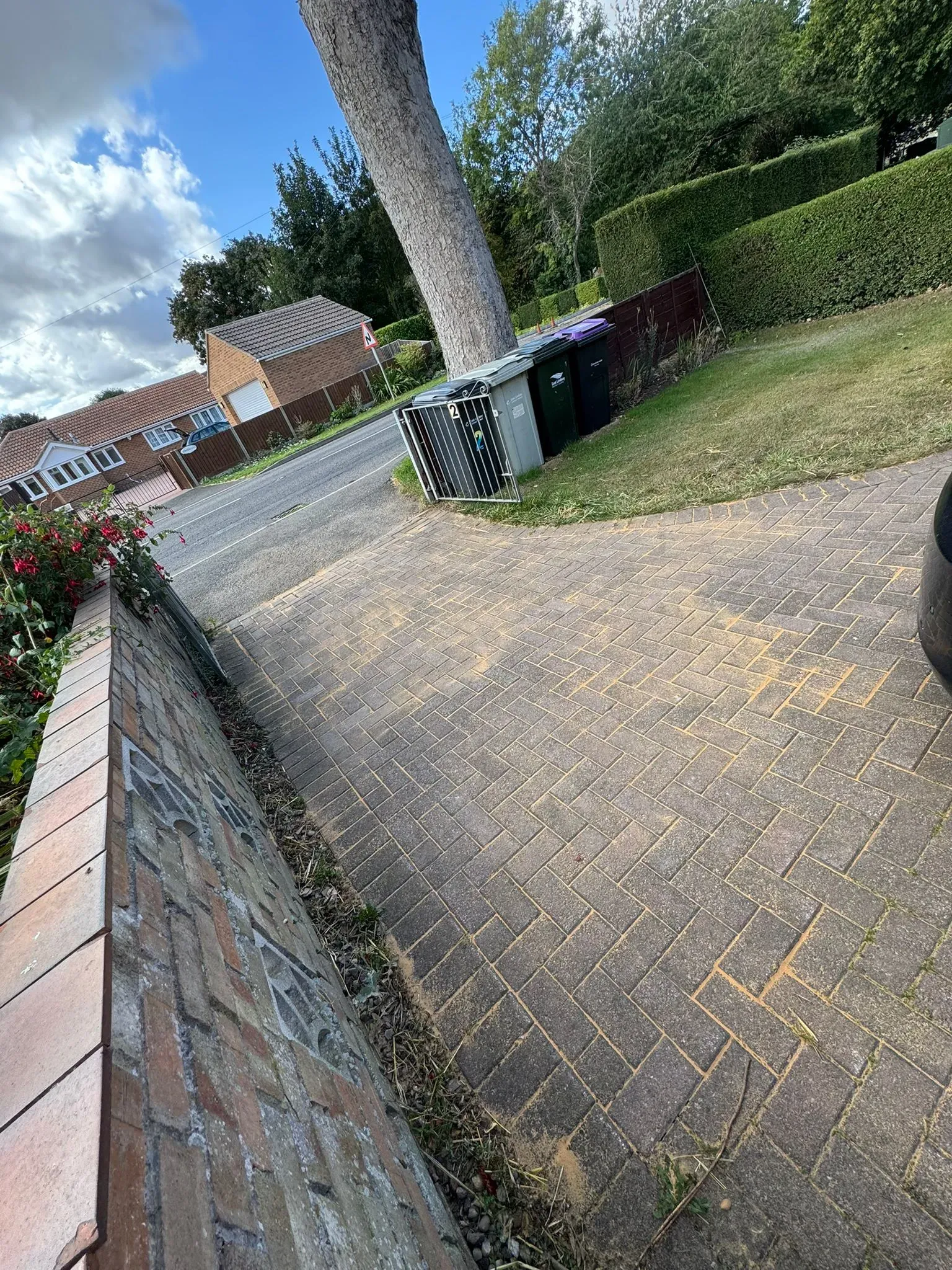
On a block-paved drive, cutting all the perimeter blocks, curves, and recessed manhole tray infills with a water-suppressed disc saw easily takes half a day to a full day on its own. Once every cut is snug, kiln-dried sand is brushed into the dry joints and the whole drive is whacked down with a rubber-soled plate compactor to settle the blocks and vibrate the sand right to the bottom of the joints. We top up the sand, wash down the frontage, and clear all offcuts.
Curing & Settling Times: When Can You Park?
Handing over a clean drive does not always mean you should swing a two-tonne SUV onto it that evening. A little patience saves marks and movement:
- Block paving: You can walk on it straight away. If edging kerbs or drainage channels were haunched in concrete on the last day or two, keep car tyres off the outer edge for 24 to 48 hours. Avoid sharp dry-steering on the spot during the first couple of weeks while the jointing sand settles fully.
- Concrete slabs: Stay off completely for 24 to 48 hours so footprints do not mark the surface. Wait at least 7 days before parking a standard family car, and 14 to 28 days for heavy vans, skips, or caravans—curing slows down noticeably in cold autumn and winter weather.
- Gravel: Ready to drive on immediately, though a quick rake over after the first week of tyre tracks helps settle the top stones evenly.
Permits, Dropped Kerbs & What Can Add Days to the Job
The physical build might take five days, but paperwork and ground surprises are what usually catch homeowners out if they are not factored in early.
New Frontage Access & Dropped Kerbs
If you are turning a front lawn into parking for the first time, or widening an entrance across a public footpath, you cannot legally bump over a full-height kerb. Across the county, you need highway consent before crossing the pavement—start with Leicestershire dropped kerb applications, which typically take several weeks from application to sign-off. We can coordinate the driveway build so levels meet the new kerb angle cleanly.
On-Site Delays Worth Planning For
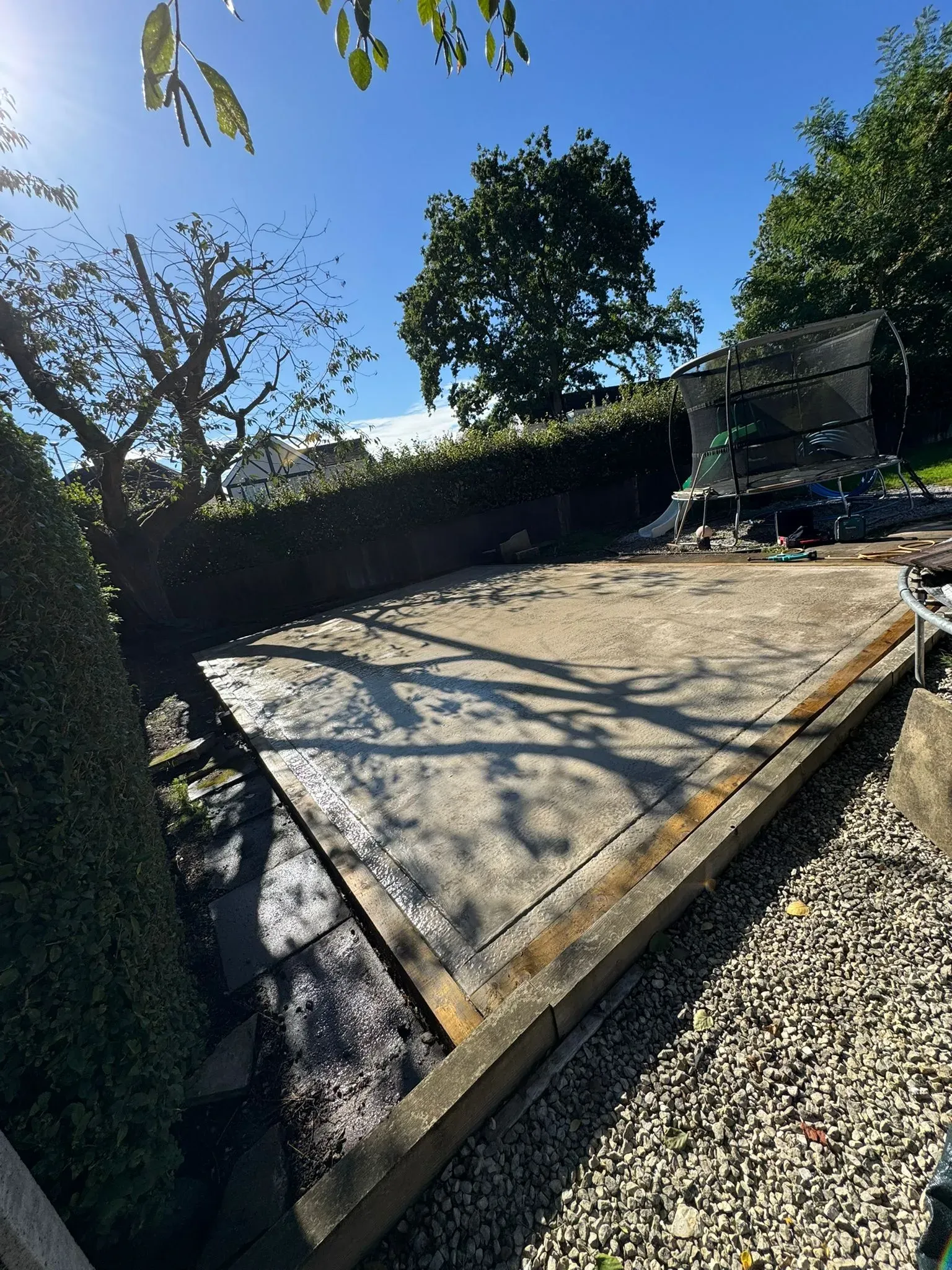
- Soft spots or old tree roots: Clay pockets or rotted stumps underneath an old tarmac drive need extra digging and thicker Type 1 stone (adds half a day to a day).
- Shallow utilities & old drains: Finding an unmarked shallow water pipe or cracked clay gully means pausing to sleeve, lower, or replace it properly.
- Heavy rain during sand screeding: You cannot vibrate kiln-dried sand into wet block joints—if it pours down on cutting day, finishing waits for a dry window.
Practical Access While We Are Working
You will need to move cars onto the street for the duration of the build, and keep pets indoors while the mini-digger and disc cutter are running. We always leave scaffold boards or safe walkways across the front door at the end of every shift so you can get in and out safely on foot, and we sweep the footpath down before packing up for the night.
If you want a realistic schedule for your own frontage—whether it is a straightforward two-car gravel refresh or a full dig-out with drainage and block paving—we will come out, measure up, check manhole levels, and give you a straight timescale and written quote.
Planning a New Driveway in Leicestershire?
Speak directly with THC Home and Garden Solutions for an honest site survey, realistic start-to-finish dates, and a clear, itemised quote.
Related Services & Guides
Explore matching driveway services and further homeowner guidance.
Driveway Installation & Heavy-Duty Surfacing in Syston
Professional driveway installation and heavy-duty surfacing in Syston and Leicestershire. Block paving, gravel, and HGV-rated concrete. Call 0116 464 8075.
Soakaway vs French Drain: Which Fixes a Boggy Garden?
See when clay soil needs a soakaway or French drain, how percolation tests and falls affect quotes, and when Building Control or Party Wall rules apply.
How to Vet a Builder or Landscaper Before Paying
Learn how to check public liability insurance, waste licences, and itemised quotes before hiring a builder or landscaper, plus key UK consumer checks.
Roof Repair vs Replacement: When Is Patching Enough?
Learn when slipped tiles or flashing leaks are worth patching, when rotten battens make re-roofing better value, and what drives repair quotes.
Do You Need Building Regs for a New Roof?
Find out when re-covering a roof triggers Building Regulations for insulation and structure, plus Leicester Building Control and permit rules.
Sandstone vs Porcelain Patios: Which Should You Choose?
Compare Indian sandstone and porcelain patios in UK weather, including slip resistance, algae upkeep, slurry priming, sub-base depth, and jointing.
How High Can a Garden Fence Be Without Planning?
Check UK garden fence and gate height limits for front and back boundaries, conservation area rules, and when to notify neighbours before building.
An Annual Exterior Checklist to Prevent Costly Repairs
Use this seasonal routine to check gutters, soffits, chimney pointing, render, and boundary walls so you catch frost or storm wear before damp sets in.
Soft Washing vs Jet Washing: Which Is Safe for Render?
Learn why jet washing can damage K-rend, soft brickwork, and roof tiles, and when low-pressure biocide soft washing safely removes moss and algae.
Best Time of Year to Lay New Turf in the UK
Learn when to lay new turf in the UK, with practical advice on Leicestershire clay soil prep, watering routines, and avoiding frost or drought.
End-of-Lease Exterior Clean-Up: What Landlords Check
Prepare commercial sites for handover and avoid dilapidation disputes. Learn what landlords check, from gutter clearance and cladding to waste removal.
What Happens During a Full Garden Clearance?
Learn what to expect during a full garden clearance, from bramble cutbacks and nesting bird checks to shed demolition, waste sorting, and legal disposal.