An Annual Exterior Checklist to Prevent Costly Repairs
Most damp patches on an upstairs bedroom wall or stained ceilings around a chimney breast start outside months before anything shows indoors. A slipped tile, a split gutter joint, or frost-loosened mortar on a boundary wall rarely costs much to put right if you catch it early. Leave it through another wet winter and you end up paying for plastering, timber repairs, and scaffolding instead of an hour on a ladder.
Why two 20-minute walk-arounds a year save thousands
You do not need to climb onto a roof yourself to run a proper check. In fact, most falls happen when homeowners lean off a domestic step-ladder trying to scoop leaves out of a corner hopper. Keep your feet on the ground and use a pair of binoculars or your phone camera on zoom after heavy rain or a hard frost.
What we see on call-outs across Leicestershire is almost always the same pattern: water finds one weak point, freezes inside the brickwork or timber behind a gutter, expands, and breaks the seal open further. Splitting the job into a spring check after the frosts and an autumn check before the gales gives you time to sort small defects while the weather is dry enough for mortar, sealant, and exterior paint to cure properly.
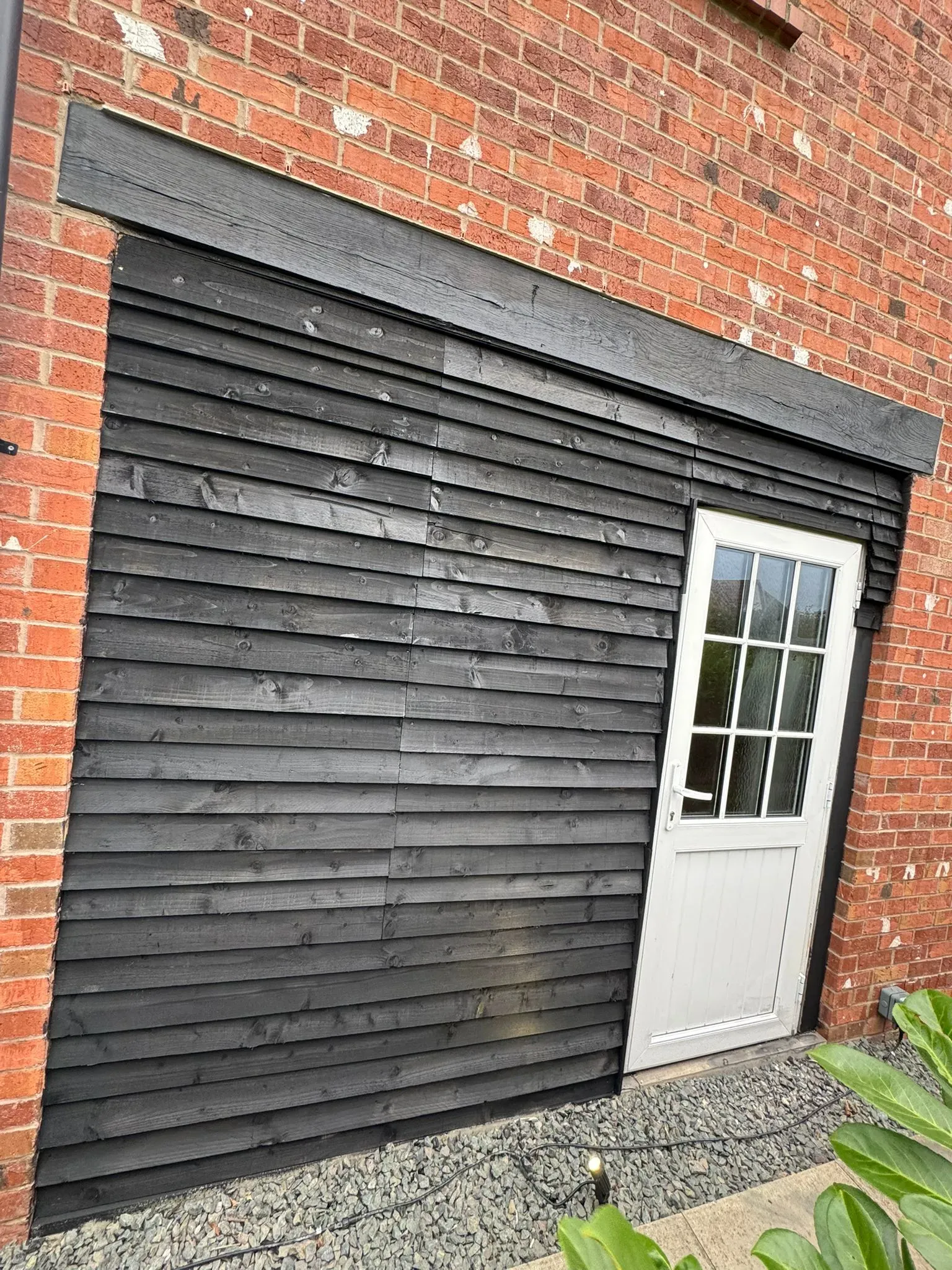
Checking junctions between cladding, brickwork, and door frames stops rainwater tracking behind the outer skin.
Spring Check: Spotting Frost & Gale Damage
Do this after the last hard frosts, ideally on a bright morning when damp patches and cracked mortar stand out clearly.
- Chimney stacks & flaunching: Look for sandy mortar dust in the gutters below the stack, loose pots, or lead flashing that has lifted away from the brick courses in high winds.
- Render & masonry faces: Check south- and west-facing walls for hairline cracks, blistering paint, or dark green algae streaks that stay wet long after rain stops.
- Boundary walls & coping stones: Press lightly on brick coping stones and pier caps. Frost loves sitting under loose copings and popping them off the top bed.
- Spalled bricks near ground level: Look below the damp-proof course where splashback from paths or flowerbeds causes brick faces to flake away.
Autumn Check: Clearing Routes for Winter Rain
Wait until most nearby deciduous leaves have dropped, then step outside during steady rain for five minutes to watch how water behaves.
- Overflowing gutters & sagging brackets: Water pouring over the front lip or dripping from union joints tells you there is either a moss plug from roof tiles or a perished rubber seal.
- Downpipes & gullies: Check that water clears cleanly into the ground drain rather than backing up and soaking the wall behind the pipe clips.
- Soffits, fascias & bargeboards: Look for peeling paint on timber boards, dark water staining, or small gaps where birds or squirrels could push into the loft eaves.
- Fence posts & gate latches: Rock wooden posts gently at shoulder height before winter gales hit; a post that has rotted just below turf level will snap cleanly in the first storm.
What Tradespeople Look For in Each Area
Knowing what looks normal versus what needs attention helps you describe the job accurately and avoid paying for work you do not actually need.
Gutters, Fascias & Soffits
Half the leaks blamed on a roof turn out to be backed-up guttering or perished felt at the eaves. On uPVC rooflines, check whether the plastic fascia is screwed to sound rafter feet or nailed over rotting timber (known as capping). If you see waviness along the fascia line or black staining on the soffit underneath, water has usually tracked behind the gutter because the felt tray has split.
Cast-iron or older deep-flow gutters often only need joints wire-brushing, re-bedding in gutter mastic, and a fresh coat of metal primer rather than ripping off.
Chimney Pointing & Leadwork
Chimneys take the worst of wind and driving rain because they are exposed on all four sides. Mortar washes out fastest on the weather side and around the flaunching (the sloped cement bed holding the chimney pots in place). Look closely at the stepped lead flashing where the stack meets the roof tiles—if mortar fillet has been used instead of proper lead, it almost always cracks within a few winters.
Where work stays within like-for-like repointing and flashing repairs, you can crack straight on. If you are stripping a large section of roof covering or altering the structure, check the Planning Portal roof Building Regulations before committing to full replacement.
Render, Pebble Dash & Brickwork
A hairline crack in sand-and-cement render lets rainwater in behind the coat, and the render acts like a trap so the brickwork behind stays wet. If you tap suspect areas gently with your knuckle, solid render sounds dull and firm; blown render that has come away from the wall sounds hollow.
Never seal blown or cracked render with thick masonry paint hoping it will bridge the gap—trapped moisture only forces bigger slabs off the wall when the next freeze hits.
Boundary Walls & Retaining Edges
Garden and frontage walls fail from the top down and the bottom up. Missing mortar between coping stones lets rainwater run straight down the core of the wall, while tree roots or frost heave push older shallow footings out of plumb. Check vertical movement joints and weep holes in retaining walls—if weep holes are choked with soil, water pressure builds behind the bricks.
If you prefer not to climb ladders or spend weekends raking out joints, booking our team for scheduled exterior property care across Leicestershire keeps guttering, masonry joints, and rooflines checked in one tidy visit.
Honest Judgment: When a Patch Repair Is Enough vs Full Replacement
A decent tradesperson should tell you when a straightforward repair will give you another ten years rather than pushing a full strip-out. Here is how we weigh it up on site:
| Area | A Repair Is Usually Enough When… | Replacement Makes More Sense When… |
|---|---|---|
| Gutters & Soffits | Leaks are at individual union clips, corners, or outlets; brackets are tight and the fascia timber behind is still solid. | Multiple lengths have warped or UV-brittled, brackets pull straight out of soft wet rafter tails, or old cast iron is cracked along the trough. |
| Chimney Stacks | Bricks themselves are sound and only the outer 20–25mm of mortar has weathered out, or lead flashing has simply pulled out of a chase. | Bricks are spalling deeply, the stack leans noticeably out of plumb, or damp has rotted mortar right through the core (needs partial rebuild). |
| Exterior Render | Damage is limited to a small patch near a downpipe or corner bead, and the rest of the elevation rings solid when tapped. | Large hollow sections are bossed across the wall, rusting steel corner beads are splitting the surface, or the wrong cement mix was put over old solid brick. |
| Boundary Walls | The wall stands plumb, cracks follow mortar joints only, and copings just need lifting, cleaning, and re-bedding on a fresh mortar bed with a damp-proof layer. | The wall leans more than a couple of inches, bricks are snapping vertically through the faces, or roots have lifted the foundation pad. |
What Actually Drives the Cost
Homeowners often ask why two pointing or roofline jobs of a similar size get very different quotes. On site, three things move the price far more than the cost of mortar or plastic pipe:
- Access & height: Clearing gutters from a safe ladder or compact tower takes an hour or two. Reaching a chimney behind a conservatory or working along three-storey gable eaves requires proper scaffolding, which adds both hire cost and setup time.
- Mortar & material matching: Older solid-wall houses need breathable lime-based mortar rather than hard Portland cement, and taking time to match sand colour and brick tint properly avoids patchy repairs.
- Hidden rot or loose brickwork: Once old fascias or blown render come off, you occasionally find rotten rafter ends or missing cavity closers that have to be put right before closing back up.
What Happens on the Day & Typical Timescales
A routine gutter clean, downpipe flush, and minor seal replacement is normally done in half a day. Before we start any masonry raking or render cutting, we lay tarpaulins over flowerbeds, paths, and neighbours' cars if boundaries are tight, then rake out loose mortar cleanly without gouging brick arrises.
Guttering is always water-tested from the high end down to the gully before ladders come down, and all moss, broken tiles, and rubble leave site with us as licensed waste carriers. Repointing a chimney or rebuilding a short run of boundary wall typically takes one to two days depending on weather and curing time.
If you are gathering quotes for bigger exterior repairs, the Citizens Advice home improvement checklist is a straightforward reference on checking written breakdowns and payment terms before anyone starts on site.

Straight Answers Before You Spend
We tell you what actually needs doing now, what can wait until summer, and give a clear written price before a ladder goes up.
Quick Checklist Summary
- ✓ Walk the perimeter after heavy rain & frost
- ✓ Watch gutter joints and gullies during downpours
- ✓ Zoom in on chimney mortar & lead flashing
- ✓ Tap suspect render patches gently for hollow spots
- ✓ Check wall copings & fence posts for movement
Spotted a Loose Coping, Damp Patch, or Overflowing Gutter?
Get it looked at before the next spell of wet weather pushes water inside. Call THC Home and Garden Solutions for a straightforward quote with no hard sell.
Related Services & Guides
Explore the matching services and practical guides for your property.
Exterior Property Maintenance in Syston
Expert exterior maintenance for homes and businesses in Syston. From roofing to garden care, THC Home and Garden Solutions do it all. Call 0116 464 8075.
Soakaway vs French Drain: Which Fixes a Boggy Garden?
See when clay soil needs a soakaway or French drain, how percolation tests and falls affect quotes, and when Building Control or Party Wall rules apply.
How to Vet a Builder or Landscaper Before Paying
Learn how to check public liability insurance, waste licences, and itemised quotes before hiring a builder or landscaper, plus key UK consumer checks.
Roof Repair vs Replacement: When Is Patching Enough?
Learn when slipped tiles or flashing leaks are worth patching, when rotten battens make re-roofing better value, and what drives repair quotes.
Do You Need Building Regs for a New Roof?
Find out when re-covering a roof triggers Building Regulations for insulation and structure, plus Leicester Building Control and permit rules.
Sandstone vs Porcelain Patios: Which Should You Choose?
Compare Indian sandstone and porcelain patios in UK weather, including slip resistance, algae upkeep, slurry priming, sub-base depth, and jointing.
How High Can a Garden Fence Be Without Planning?
Check UK garden fence and gate height limits for front and back boundaries, conservation area rules, and when to notify neighbours before building.
Soft Washing vs Jet Washing: Which Is Safe for Render?
Learn why jet washing can damage K-rend, soft brickwork, and roof tiles, and when low-pressure biocide soft washing safely removes moss and algae.
Best Time of Year to Lay New Turf in the UK
Learn when to lay new turf in the UK, with practical advice on Leicestershire clay soil prep, watering routines, and avoiding frost or drought.
End-of-Lease Exterior Clean-Up: What Landlords Check
Prepare commercial sites for handover and avoid dilapidation disputes. Learn what landlords check, from gutter clearance and cladding to waste removal.
How Long Does It Take to Install a New Driveway?
Learn how long block paving, gravel, and concrete driveways take, from excavation and curing times to Leicestershire skip and dropped kerb permits.
What Happens During a Full Garden Clearance?
Learn what to expect during a full garden clearance, from bramble cutbacks and nesting bird checks to shed demolition, waste sorting, and legal disposal.